When Does a House Need to Be Rewired?
Most homes don't need full rewiring until wiring systems reach 50-70 years old, but specific materials and patterns force the issue much earlier. You're looking at a complete rewire when the existing system can't be safely patched, extended, or brought to code through targeted repairs.
The typical triggers: aluminum branch wiring, knob-and-tube systems still carrying loads, chronic overheating at outlets or the panel, or a home inspector's report that stops a sale in its tracks.
The decision often comes down to risk tolerance versus cost. A single circuit failure might cost $300 to repair. Chronic issues across multiple rooms signal systemic problems that partial fixes won't solve. You're just delaying the inevitable while stacking repair bills.
Insurance companies have made this calculation simpler in recent years by refusing to renew policies on homes with certain wiring types, effectively forcing rewiring as a condition of coverage.
Aluminum Wiring and Fire Hazard Concerns
Homes built between 1965 and 1973 often used solid aluminum branch wiring when copper prices spiked. The problem isn't aluminum itself. It's how it behaves at connection points.
Aluminum expands and contracts more than copper under electrical load, gradually loosening connections at outlets and switches. Those loose connections create resistance, which generates heat, which accelerates oxidation, which increases resistance further. You end up with a feedback loop that can ignite surrounding materials.
The Consumer Product Safety Commission found homes with aluminum wiring are 55 times more likely to reach "fire hazard conditions" at outlets compared to copper-wired homes. That's not a typo.
Arizona insurers know this data, which is why State Farm, Farmers, and several other carriers now require aluminum wiring replacement or professional mitigation (COPALUM crimping) before they'll issue or renew policies. You'll get 30-90 days to provide documentation from a licensed electrician, or your policy cancels.
| Remediation Method | Cost Range | Insurance Acceptance | Long-Term Risk Reduction |
|---|---|---|---|
| Full Copper Replacement | $6,000-$16,000 | All carriers accept | Complete elimination |
| COPALUM Crimping | $2,400-$6,400 | Most carriers accept | Reduces connection risk only |
| AlumiConn Connectors | $1,500-$3,500 | Some carriers reject | Lower reliability |
If your home has aluminum wiring, you have three options: full replacement with copper romex (what we're covering here), COPALUM crimp remediation at every connection point (runs $40-$80 per outlet/switch but leaves aluminum in walls), or AlumiConn connectors (cheaper but not accepted by all insurers). Full rewiring is the only option that completely eliminates the hazard and satisfies every insurance underwriter.
Knob-and-Tube and Other Outdated Systems
Knob-and-tube wiring was standard in homes built before 1950. It's not inherently dangerous when untouched and lightly loaded, but it becomes a liability the moment homeowners start adding insulation, running modern appliances, or making amateur modifications.
The system has no ground wire, uses cloth insulation that degrades over decades, and wasn't designed for continuous loads above 5-10 amps per circuit. Your microwave alone pulls 12 amps.
Phoenix-area homes from the 1940s and '50s often mixed knob-and-tube with early romex as homeowners added rooms or upgraded kitchens. You end up with three generations of wiring methods running through the same walls, none of it labeled, much of it spliced by people who didn't pull permits. Licensed electricians won't extend or modify knob-and-tube systems. Liability concerns make it a non-starter.
If you're remodeling a pre-1950 home and opening walls anyway, full rewiring becomes the practical choice rather than working around an obsolete system you can't legally expand.
Beyond aluminum and knob-and-tube, you're looking at rewiring when outlets show scorch marks, breakers trip without obvious overloads, you smell burning plastic near the panel, or your home still runs on a 60-amp or 100-amp main service inadequate for modern loads. These patterns indicate the wiring system has reached end-of-life and patchwork repairs won't restore safe operation.
How Much Does Whole House Rewiring Cost?
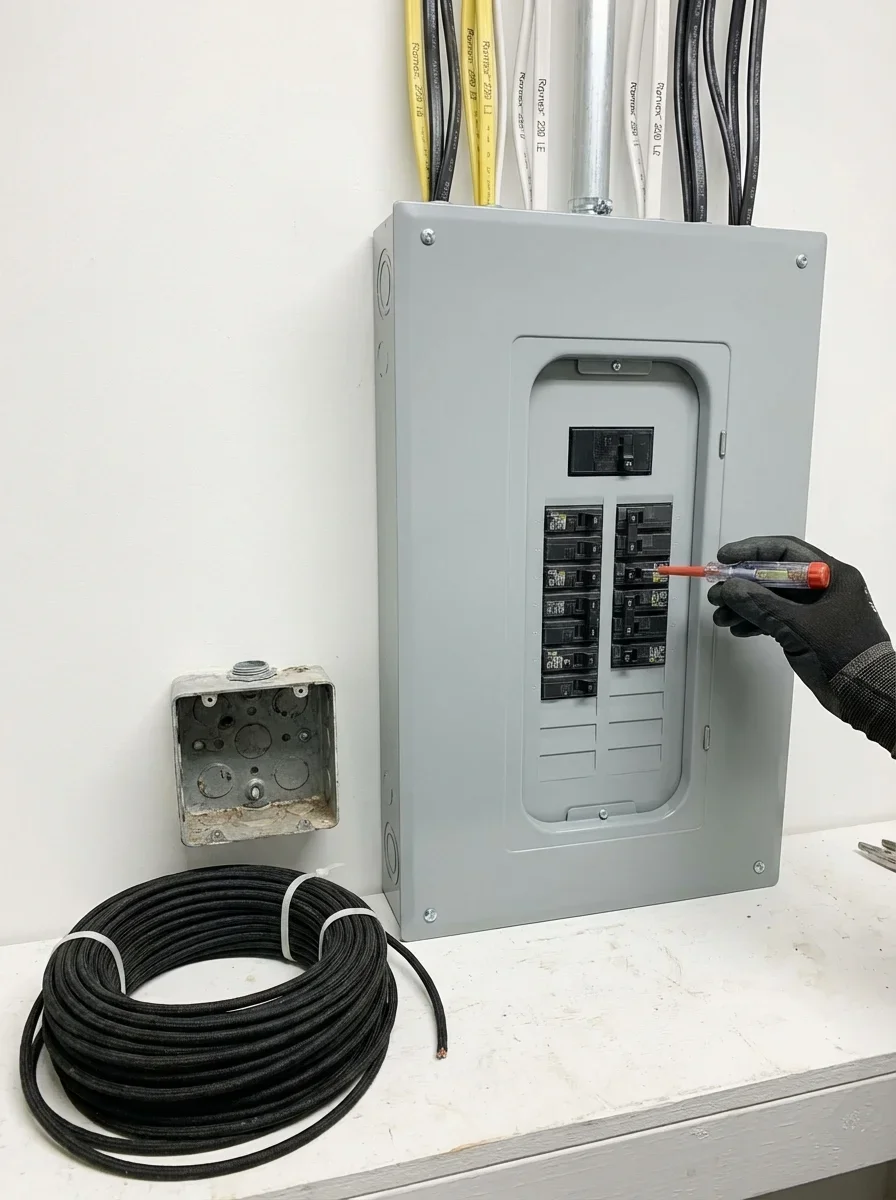
Expect to spend $4,000 to $12,000 for most single-family homes in the Phoenix metro, with projects pushing $15,000 to $25,000 when you're dealing with two-story homes, limited attic access, plaster walls, or simultaneous panel upgrades.
The cost spread reflects variables contractors can't quote accurately until they've walked the property: wall type, number of circuits, whether walls are already open from remodeling, and how much of the existing system can be reused (often none of it when you're replacing aluminum or knob-and-tube).
Labor drives 60-70% of total cost. An electrician isn't just pulling wire. They're routing new circuits through finished walls, drilling through studs and joists without hitting existing plumbing or HVAC ducts, replacing every outlet and switch, connecting everything to a new or upgraded panel, coordinating with drywall contractors for patching, and scheduling inspections with the city.
A full rewire typically requires two licensed electricians working 3-7 days straight, which explains why labor costs stack up faster than materials.
Cost by Home Size and Complexity
Square footage provides a starting point, but accessibility matters more than raw size. A 1,200 sq ft single-story block home with a cramped attic and no crawl space can cost more to rewire than a 1,800 sq ft two-story frame home with open attic runs and an accessible basement (rare in Arizona, but the comparison holds).
Here's what licensed electricians typically quote for homes with standard access:
1,000-1,200 sq ft: $4,000-$6,500. Assumes 8-12 circuits, single story, standard drywall, accessible attic or crawl space. If you're dealing with plaster walls or block construction requiring surface conduit in some areas, add $1,000-$2,000.
1,500-2,000 sq ft: $6,500-$9,500. Two-story homes at this size often cost the same as larger single-story homes because vertical runs through walls add labor but reduce attic crawling. Homes with vaulted ceilings or complex rooflines can push toward the high end. Electricians charge more when they're running wire through spaces where a standard fish tape won't reach.
2,000-2,500 sq ft: $9,000-$13,000. At this size you're looking at 15-20 circuits minimum, multiple sub-panels in some cases, and enough outlet/switch replacements that the material costs start to add up even though wire itself is relatively cheap. Older Scottsdale homes with thick plaster over block can hit $15,000 because access requires more wall cutting and subsequent drywall repair.
2,500+ sq ft: $12,000-$25,000+. Large homes in Paradise Valley, Arcadia, or custom builds in North Scottsdale often combine size with complexity. Three-car garages with dedicated circuits, pool equipment sub-panels, extensive landscape lighting, and smart home pre-wiring that doubles circuit counts.
If you're adding a sub panel installation as part of the rewire to support a future kitchen remodel or workshop, budget another $1,200-$2,500 for the additional panel and feeder wire.
Phoenix-area pricing runs slightly below national averages for straightforward jobs but catches up fast once you hit complications. Arizona's slab-on-grade construction means all wiring runs overhead through attics or inside walls. There's no basement to simplify things.
Summer heat in attics (140°F+ from June through September) limits how many hours per day electricians can work in those spaces, which can extend project timelines and increase labor costs on jobs scheduled during peak heat.
Key Cost Factors That Increase Your Quote:
- Plaster walls vs. drywall (+$1,000-$2,500)
- Limited attic access or complex roof structure (+$800-$1,500)
- Panel upgrade from 100A to 200A service (+$1,500-$3,000)
- Summer scheduling with heat-limited work hours (+10-15% timeline extension)
- Block construction requiring surface conduit runs (+$1,200-$2,200)
- AFCI breaker requirements for code compliance (+$400-$600 in materials)
Aluminum Wiring Replacement Cost
Replacing aluminum wiring costs 15-30% more than standard rewiring because electricians can't reuse any of the existing wire. It all comes out.
You're also replacing every outlet, switch, and junction box since aluminum-rated devices aren't compatible with copper romex. Total costs for aluminum replacement typically run $6,000-$9,000 for 1,200 sq ft homes and $10,000-$16,000 for 2,000+ sq ft homes.
The higher cost buys you something partial remediation doesn't: immediate insurability and a genuine reduction in fire risk. COPALUM crimping leaves aluminum wire in place and costs $30-$80 per connection point, which sounds cheaper until you count every outlet, switch, light fixture, and junction in your home. A 1,500 sq ft home might have 60-80 connection points, putting COPALUM remediation at $2,400-$6,400.
Within striking distance of full replacement cost but without the long-term peace of mind.
Some Arizona electricians offer staged aluminum replacement where they rewire high-risk areas first (kitchen, laundry, garage) and leave lower-load circuits for a future phase. This approach can satisfy some insurers if documented properly, but verify coverage before starting work. If your carrier requires complete replacement, partial work won't stop a policy cancellation.
What's Involved in a Complete Rewiring Project?
A full rewire means exactly that. New wire from the panel to every outlet, switch, light fixture, and appliance connection in the home.
Licensed electricians start by installing a new electrical panel or verifying the existing panel meets current code and can handle the new circuit layout. Most rewiring projects in homes built before 1990 include panel upgrades from 100-amp to 200-amp service because older panels lack the capacity and circuit slots for modern electrical loads. Factor $1,500-$3,000 for a panel upgrade if your electrician determines it's necessary.
The electrician then maps out circuit routing to minimize visible conduit and drywall cutting. In single-story homes with accessible attics, most wire runs overhead with drops down through walls to outlets and switches. Two-story homes require more inside-wall fishing since you can't always route through attics to reach first-floor locations.
Every wire run requires drilling through studs and top plates, careful fish-tape work to avoid snagging insulation or existing pipes, and secure stapling every 4.5 feet per National Electrical Code requirements.
Old wire stays in place if it's not accessible. Electricians rarely rip out knob-and-tube or aluminum wiring buried in walls unless those walls are already open. They disconnect it at both ends, cap it safely, and leave it abandoned in place.
Removing old wire from finished walls adds days of labor for minimal safety benefit since the new wire provides a completely independent system. If you're concerned about what's left behind, ask your electrician to label all abandoned circuits at the panel so future homeowners know what's live and what's dead.
Once new wire is in place, electricians install new outlets, switches, and covers throughout the home. This is when you'll notice cosmetic changes. Modern outlets sit slightly different in boxes than 1970s-era devices, and new covers might not align perfectly with old paint lines.
Budget for painting and minor drywall touch-ups unless your contract explicitly includes cosmetic restoration. Most electrical contracts cover "functional drywall repair" (patching holes to close the wall) but not finish work like texture matching and paint.
The final steps involve connecting all new circuits to the panel, labeling everything clearly, and scheduling inspections. Arizona cities require permits for whole house rewiring, and the work won't pass inspection unless performed by an ROC-licensed electrician. Your electrician should pull permits as part of the quoted cost.
If they suggest skipping permits to save money, you're talking to someone who'll leave you with an unpermitted system that tanks your home's resale value and voids insurance coverage.
Permits, Inspections, and Code Requirements
Every Arizona municipality requires electrical permits for rewiring projects, and inspections happen in phases. Your electrician schedules a rough-in inspection once wire is run but before drywall repair begins, allowing the inspector to verify proper wire gauge, stapling intervals, box fill calculations, and grounding methods.
After rough-in passes, drywall goes back up and electricians complete final connections. The final inspection covers panel layout, proper circuit labeling, AFCI/GFCI protection where required, and verification that all work matches the permitted scope.
Permit costs run $200-$600 depending on city and project scope. Tempe, Chandler, Gilbert, and Scottsdale charge permit fees based on project valuation, usually 1-2% of the total cost. Phoenix uses a flat fee structure that's often cheaper for large projects.
Your electrician includes permit costs in their quote, but verify this upfront. Some contractors quote "permit-ready pricing" and add permit fees as a separate line item once work begins.
Current code requires AFCI (arc-fault circuit interrupter) protection on most 15- and 20-amp circuits, which adds $35-$50 per AFCI breaker compared to standard breakers. A typical rewire might need 8-12 AFCI breakers, adding $400-$600 to material costs.
Kitchens, bathrooms, garages, and outdoor outlets also require GFCI protection, which your electrician will include automatically. These requirements didn't exist when your home was built, which is why the new panel ends up larger and more expensive than the old one.
ROC-licensed electricians carry the liability for code compliance and inspection passage. If something fails inspection, they return and correct it at no additional cost. That's part of professional licensing.
Unlicensed handymen or electrician's helpers working under the table can't pull permits legally, which means you're stuck hiring a licensed contractor to inspect their work and sign off (assuming it's even correctable). Verify your electrician's ROC license at https://roc.az.gov/ before signing any contract.
Pro Tip: Request a copy of the approved permit and all inspection reports before making final payment. These documents prove the work was completed legally and will be essential for insurance claims, home sales, or future electrical work. Some municipalities purge permit records after 7-10 years, making your paper copies the only proof of compliant installation.
How Long Does Rewiring Take?
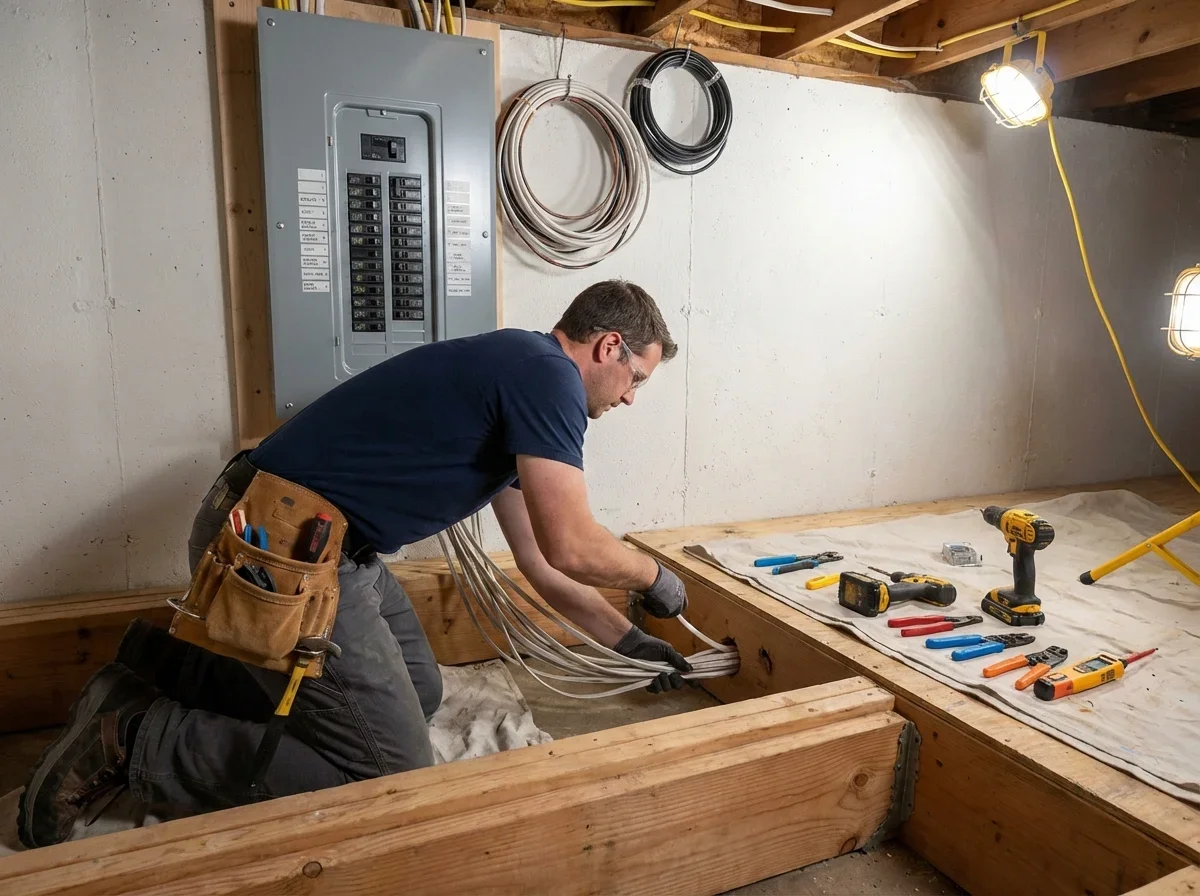
Plan for 3-7 days of active work for most single-family homes, with the timeline stretching to 10-14 days when you're combining rewiring with a kitchen remodel electrical upgrade or dealing with extensive plaster repair.
The work itself happens in phases: panel installation (1 day), wire pulling and rough-in (2-4 days depending on home size and access), drywall patching (1 day if included), and final device installation plus inspection (1 day). Projects rarely run continuously. Electricians often schedule drywall contractors between rough-in and final, adding 2-3 days of downtime.
You can stay in the home during most rewiring projects, though you'll lose power for 4-8 hours on panel installation day and intermittently during final connections. Some homeowners with flexible schedules choose to stay elsewhere for the week to avoid dust and the constant sound of drilling through studs.
If your electrician needs to cut into multiple rooms, professional cleaning afterward runs $200-$400 and might be worth it to avoid breathing drywall dust for weeks.
Weather affects timelines in Phoenix differently than elsewhere. Summer heat limits attic work to early morning hours, which can extend a 5-day project to 7-8 days because electricians can only pull wire through attics from 6 AM to 11 AM before temperatures hit dangerous levels.
Fall and spring scheduling (October through April) allows full-day attic access and faster completion. If you have flexibility on timing, avoid June through August scheduling unless you're dealing with an insurance-driven deadline.
Inspection scheduling adds 1-3 days to most projects. Gilbert and Chandler typically schedule inspections within 24-48 hours of electrician requests. Phoenix and Scottsdale can run 3-5 days out during busy construction seasons.
Your electrician should give you a realistic timeline that includes inspection wait times. If they promise "done in 3 days guaranteed," they're either scheduling inspections without city cooperation or planning to finish work before inspections pass (a red flag).
How to Choose a Licensed Electrician for Rewiring
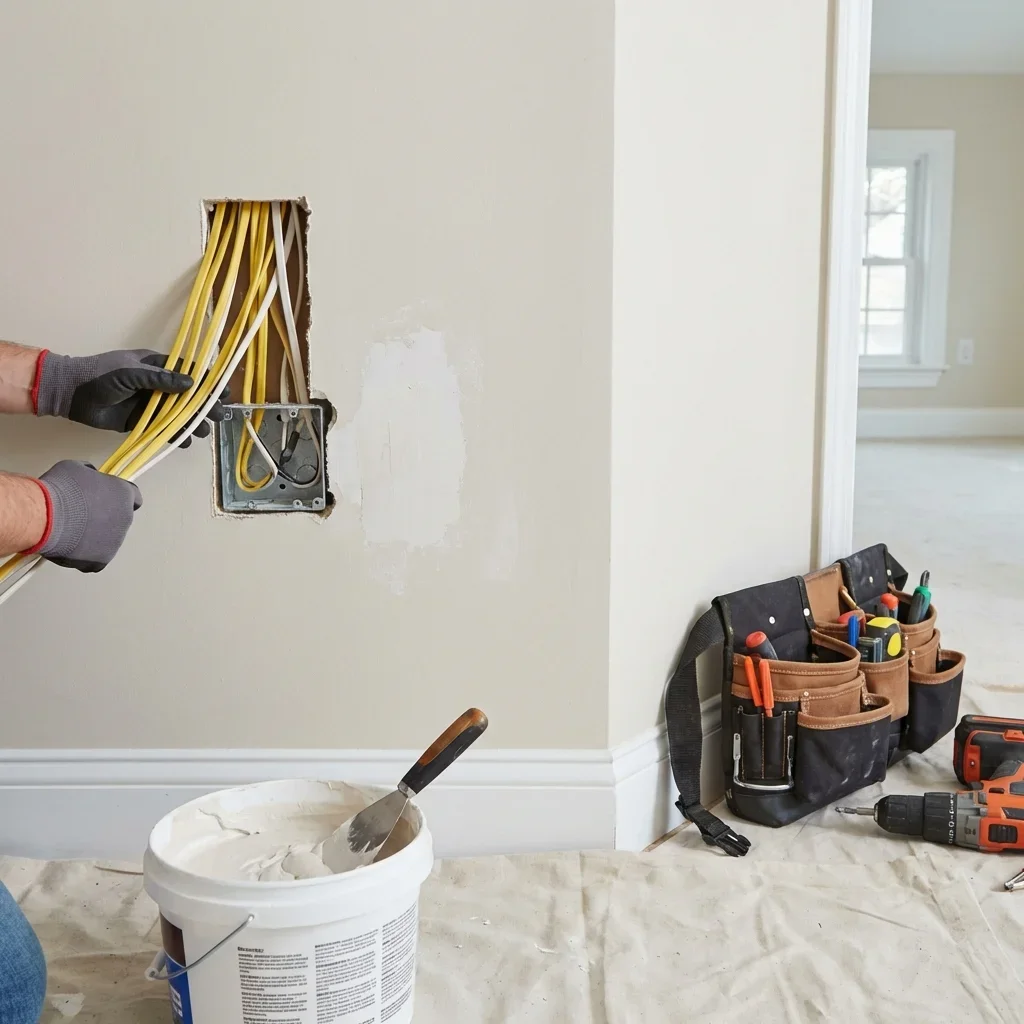
Whole house rewiring sits at the top of residential electrical complexity. You're not hiring someone to swap outlets. You're trusting them to route a complete electrical system that'll serve your home for the next 40-50 years.
Start with ROC license verification at roc.az.gov and confirm they hold an active residential electrical contractor license (the "L-37" classification in Arizona). Commercial electricians hold different licenses and may not be qualified for residential work.
Ask about insurance beyond the minimum ROC bond. Arizona doesn't require workers comp for contractors, which means some electricians operate without it. If a worker gets injured in your attic and there's no workers comp policy, they can sue you personally as the property owner.
Request certificates for general liability ($1M minimum) and workers comp before work begins. If the contractor says "I don't need workers comp because I don't have employees," verify that claim. One-person operations are exempt, but the moment they bring a helper, coverage becomes mandatory.
Get specific about what's included in the quote and what's not. Questions worth asking:
- Does your quote include permit fees and inspection scheduling?
- Are you replacing the main panel, and is that cost separate or included?
- What exactly does "drywall repair" mean: functional patching or finished texture and paint?
- How many circuits are you installing, and are AFCI breakers included in material costs?
- What's your timeline from start to final inspection, and what could delay it?
- Do you warranty your work, and for how long?
Legitimate electrical contractors warranty their work for at least one year and often longer. Some offer 3-5 year warranties on labor, which signals confidence in workmanship.
If an electrician won't stand behind their work for at least 12 months, you're talking to someone who doesn't expect to be in business long-term.
References matter more for rewiring than simple repairs. Ask for three recent whole-house rewiring projects (not just outlet repairs or panel swaps) and call those homeowners directly. Specific questions to ask references: Did the project finish on time? Did the quoted price hold or were there surprise additions? How did they handle drywall repair?
Would you hire them again for major electrical work?
Some Phoenix-area homeowners report quotes varying by $5,000-$8,000 for the same scope of work, which suggests some electricians are bidding low to win the contract and planning change orders once walls are open. Protect yourself by getting itemized quotes that break out labor, materials, permits, panel upgrades, and any optional work.
The middle quote is often the safest. The low bidder might be cutting corners or planning surprise fees, while the high bidder might be padding for projects that are genuinely easier than expected.
Get Quotes from Qualified Rewiring Contractors
Whole house rewiring isn't a project where you should DIY to save money or hire the cheapest bidder because "wire is wire." The quality difference between a licensed electrician who's rewired 50 homes and a handyman who's "done some electrical" shows up in circuit layout, wire routing efficiency, proper box sizing, clean panel organization, and whether your system passes inspection the first time or requires three re-inspections and correction visits.
Compare at least three quotes from ROC-licensed contractors who've performed multiple complete rewiring projects in the past year. Look for electricians familiar with Arizona's specific construction patterns. Someone who regularly works on 1960s block homes understands the access challenges and can quote accurately rather than discovering problems three days into the job.
If you're dealing with aluminum wiring replacement, verify the contractor has specific experience with insurance-driven remediation and can provide documentation that satisfies your carrier.
Schedule quotes for times when the electrician can access your attic and crawl spaces (if applicable) to evaluate actual routing difficulty. A quote based on square footage alone won't account for the reality that your home has blown-in insulation burying junction boxes or a complex roof structure that makes overhead runs nearly impossible.
The best quotes come from electricians who've spent 30-45 minutes walking the property, not contractors who glance at square footage and hand you a number.
If you're uncertain whether you need full rewiring or can get by with targeted repairs, start with an electrical wiring inspection. A thorough inspection runs $200-$400 and gives you a documented assessment of your system's condition, specific hazards, and recommendations for remediation scope.
Some inspection costs apply toward rewiring if you hire the same contractor, and you'll have professional documentation to share with insurance carriers or use during home sales.
Don't let insurance deadlines force you into the first available contractor. If you have 30-60 days before policy cancellation, use that time to vet electricians properly rather than signing with whoever can start tomorrow.
Emergency scheduling often means higher costs and less bargaining power. Contractors know you're under pressure and price accordingly.