What Arizona Law Says About Electrical Licensing
Arizona requires all electrical contractors performing work over $1,000 to hold an active ROC license. The relevant license for residential electrical work is the C-11 Residential Electrical license. Commercial work requires an A-11 Commercial Electrical license.
The ROC doesn't license individual electricians. It licenses the contracting business.
But the business must employ a qualifying party — the person whose electrical qualifications allow the company to operate. That qualifying party must meet specific experience requirements, which is where the journeyman vs. master distinction becomes relevant.
You can verify any contractor's license status, qualifying party, and complaint history at https://roc.az.gov/. The lookup shows the qualifying party's name, license type, and whether the license is active. If a contractor can't provide an ROC number or tells you they "don't need one for small jobs," that's an immediate red flag.
Who Can Qualify an Electrical Contracting Business in Arizona
To qualify for an ROC C-11 license, the qualifying party must have either:
- Four years of documented experience as a journeyman electrician, or
- Two years as a certified master electrician
This experience must be verifiable. The ROC requires employment records, tax documents, and sometimes letters from previous employers. The qualifying party is legally responsible for all work performed under that license, even if they're not on-site for every job.
| Qualification Level | Required Experience | Can Qualify ROC License? | Can Pull Permits? |
|---|---|---|---|
| Journeyman Electrician | 8,000 hours apprenticeship + exam | Only after 4 years documented work | No (must work under license) |
| Master Electrician | 12,000+ hours + master exam | Yes (after 2 years certified) | Yes (as qualifying party) |
Journeyman Electrician: Training, Experience, and What They Can Do
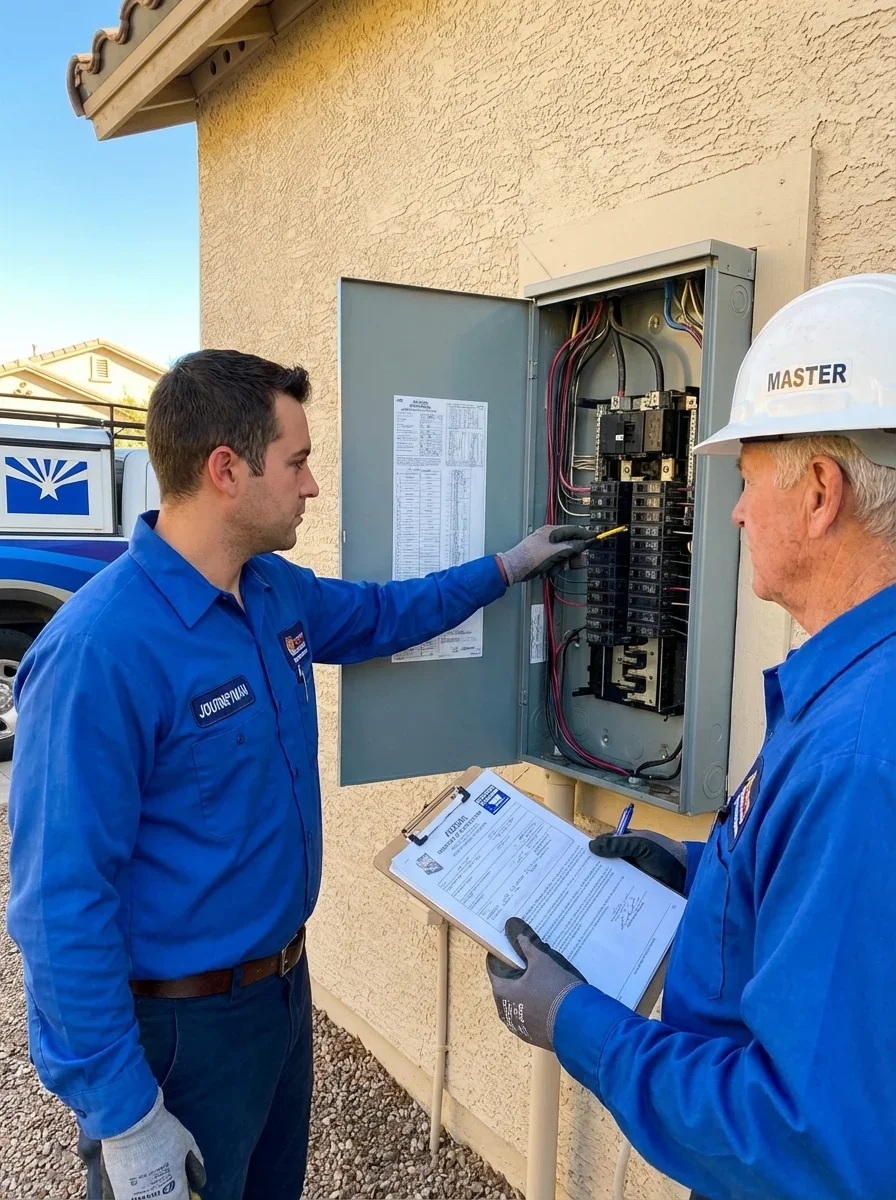
A journeyman electrician has completed an apprenticeship (typically 8,000 hours of supervised work plus classroom training) and can perform electrical installations and repairs independently under the supervision of a master electrician or qualifying party.
Journeymen handle the majority of on-site work. They install panels, run wire, troubleshoot circuits, and complete most residential projects from start to finish.
The supervision requirement doesn't mean a master electrician stands over their shoulder. It means the work happens under a licensed contractor's legal authority.
Journeymen cannot pull permits in their own name or operate an electrical contracting business without a qualifying master electrician. If you're hiring an independent electrician for EV charger installation or recessed lighting, they must work under a valid ROC license held by a qualifying master.
What "Supervision" Actually Means on Your Project
Arizona law doesn't specify the physical presence required for supervision. In practice, a journeyman working under an ROC license can complete your project on-site while the qualifying master electrician manages the work remotely — reviewing plans, pulling permits, and ensuring code compliance.
For complex projects like kitchen remodel electrical or pool and spa electrical, expect the qualifying party or master electrician to visit the site for initial assessment and final inspection. Simple service calls — outlet replacements, ceiling fan installation — often involve only the journeyman technician.
The key question: who signs the permit and whose license is on the line if something goes wrong?
That's always the qualifying party, regardless of who does the physical work.
Master Electrician: Additional Qualifications and Authority
A master electrician has met additional experience requirements beyond journeyman level — typically 12,000+ total hours and passing a master electrician exam. In Arizona, master certification comes from organizations like the International Code Council (ICC) or through reciprocity from other states.
Master electricians can qualify an ROC contracting license. This means they can legally operate an electrical business, pull permits, and supervise other electricians.
They're also the ones who typically handle permit applications, communicate with inspectors, and take legal responsibility for code compliance.
Not every electrician working on your home needs to be a master. But the business you hire must have one on record as the qualifying party. When you call for quotes on sub panel installation or electrical troubleshooting, ask who the qualifying party is and confirm their credentials through the ROC lookup.
The Practical Difference for Your Project
From a homeowner's perspective, the journeyman vs. master distinction matters less than the ROC license status of the contracting company. A well-run company with a master electrician qualifying the license and experienced journeymen doing the fieldwork will deliver excellent results.
Problems arise when unlicensed "handyman electricians" claim they don't need a license for small jobs (false), or when a contractor's qualifying party left the company but the business keeps operating under the old license (illegal).
Always verify the current ROC status before work begins.
When You Need a Master Electrician vs. a Journeyman
For permitted work — anything involving new circuits, panel upgrades, or structural changes — the contractor's qualifying master electrician pulls the permit and ensures the work meets National Electrical Code (NEC) standards and Arizona amendments.
Simple repairs and replacements often don't require permits. Replacing a failed outlet, fixing flickering lights, or installing a new light fixture typically fall under maintenance exemptions.
A qualified journeyman working under an ROC license handles these jobs without master-level oversight for every step.
You need a master electrician's involvement (via the qualifying party) for:
- Whole house rewiring or major remodels
- New construction electrical
- Service panel upgrades from 100A to 200A
- Adding subpanels or dedicated circuits for high-draw equipment
- Pool and spa electrical installations
- Any work requiring city or county permits
For these projects, the master electrician reviews plans, applies for permits, coordinates inspections, and signs off on final approval. The journeyman may do 95% of the physical installation, but the master's certification makes it legal.
Arizona Permits and Inspection Requirements
Most electrical work beyond simple repairs requires permits in Arizona municipalities. Phoenix, Scottsdale, Tempe, Mesa, and Chandler all enforce permit requirements for new circuits, panel work, and high-voltage installations like EV chargers (Level 2, 240V).
Unpermitted electrical work creates serious problems.
It voids homeowners insurance if a fire occurs. It complicates home sales when buyers' inspectors flag unpermitted additions. And it leaves you with no recourse if the work fails — the ROC won't investigate complaints about unlicensed work.
The permit holder is the qualifying party on the ROC license. When inspectors visit your home, they verify the work against the permit and the licensed contractor's credentials. A journeyman can be on-site during inspection, but the permit belongs to the master electrician or qualifying party.
How Arizona's Licensing Differs from Other States
Some states issue individual journeyman and master electrician licenses. An electrician gets certified, carries that license across jobs, and can work for any contractor.
Arizona doesn't do that.
Instead, Arizona electricians work under a company's ROC license. The company holds the license, not the individual electrician. If the qualifying party leaves the company, the business must find a new qualifier or cease electrical operations within 30 days.
What This Means When Hiring an Electrician
When you hire an electrician in Arizona, you're hiring the licensed contracting company, not the individual technician. The ROC bond (ranging from $4,000 to $15,000 depending on license type) protects you if the contractor abandons a job or violates contract terms, but it won't cover major damages.
Verify the contractor carries general liability insurance and workers' compensation (though Arizona doesn't mandate workers' comp, reputable contractors carry it).
If the electrician who gave you a quote mentions they're a journeyman, ask: "What's your company's ROC license number, and who is the qualifying party?" If they claim they work independently without a business license, they're operating illegally. Walk away.
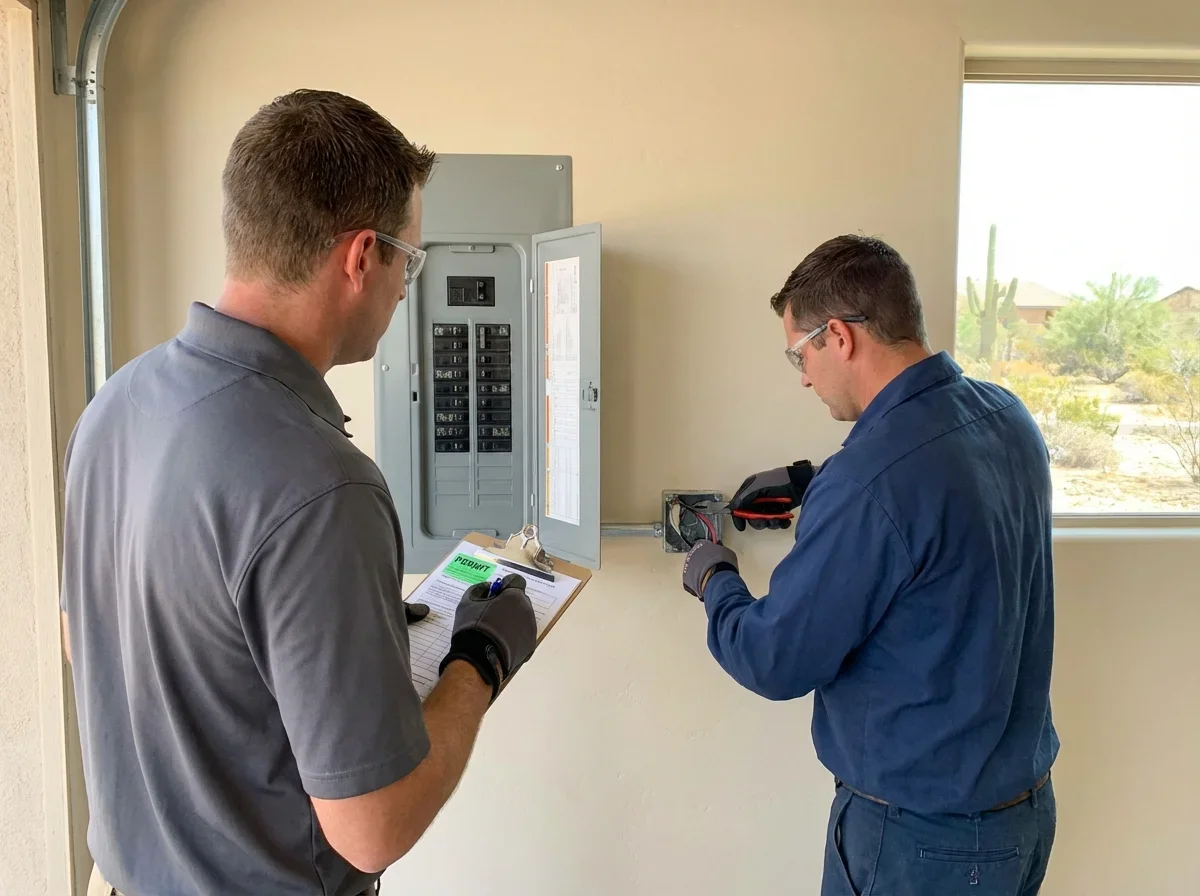
Red Flags and How to Verify Credentials
Arizona's licensing system creates opportunities for unlicensed operators. Common red flags include:
"I don't need a license for jobs under $1,000." False. The $1,000 threshold determines whether you need an ROC license to operate a contracting business, but it doesn't exempt anyone from electrical code requirements or individual trade certifications.
Even minor electrical work must meet code.
"I'm a master electrician, so I don't need an ROC license." False. Master certification allows someone to qualify an ROC license, but it doesn't replace the license. All electrical contracting in Arizona requires an active ROC license.
"My qualifier is on vacation, but I can start your project now." Risky. Permitted work shouldn't begin until the qualifying party reviews plans and pulls the permit. Starting before permits are issued creates complications during inspection.
Using the ROC License Lookup
Visit https://roc.az.gov/ and enter the contractor's license number or business name. The lookup shows:
- Active or expired license status
- Qualifying party name and certification
- Bond amount
- Complaint history and disciplinary actions
- Insurance information (if provided)
If the contractor can't immediately provide an ROC number or their license shows "expired" or "suspended," stop the conversation.
For projects like commercial electrical or complex residential work, verify the qualifying party holds appropriate certifications (C-11 for residential, A-11 for commercial) matching your project type.
Pro Tip: Before signing any contract, screenshot the ROC lookup showing the contractor's active license and qualifying party. If disputes arise later, you'll have documentation proving the license was valid when you hired them.
Questions to Ask Before Hiring
When evaluating electricians for your project, these questions clarify who's doing the work and under what authority:
"What's your ROC license number?" They should answer immediately without hesitation. Write it down and verify it before signing a contract.
"Who is your qualifying party, and will they be involved in my project?" For permitted work, the qualifier should review your project and pull permits. For service calls, they may not visit the site but remain legally responsible.
"Will the electrician who quoted my job be the one doing the work?" Some companies send a salesperson for estimates and dispatch different technicians for the work. Know who's coming to your home.
"Do you pull permits for this type of work?" If the project requires a permit and they say no, they're either cutting corners or don't understand code requirements. For guidance on what requires permits, see our page on electrical code compliance and permit services.
"What insurance do you carry beyond the ROC bond?" The ROC bond is minimal. General liability insurance (minimum $1 million) and workers' comp protect you from accidents and property damage.
For a full list of vetting questions, see our guide on questions to ask before hiring an electrician.
Finding Qualified Electricians in Arizona

Qualified electricians are busy, especially during peak season (May through September when air conditioning electrical work surges). Expect lead times of 1-3 weeks for non-emergency projects like smart home wiring or lighting design.
Emergency calls for issues like outlet sparking or hot electrical panels should get same-day or next-day response from reputable contractors.
If a company can't accommodate emergencies but quotes you for a panel upgrade three weeks out, that's normal. If they claim immediate availability for a major project during peak season, ask why they're not busier.
Top-rated contractors in Phoenix, Mesa, Scottsdale, and Chandler maintain full ROC licensing, carry robust insurance, and employ both journeyman and master electricians. Many specialize in specific work — some focus on residential service calls, others handle large commercial projects. Match the contractor's expertise to your project type.
Regional Considerations for Arizona Electrical Work
Arizona's climate and construction methods create unique electrical demands. Phoenix metro's slab-on-grade construction (no basements) means all electrical runs through attic spaces or under the slab.
Summer attic temperatures exceed 150°F, accelerating wire insulation degradation.
Hard water and electrical systems don't directly interact, but Phoenix's extremely hard water (300+ ppm calcium carbonate) affects whole-home systems. Water softeners, tankless water heaters, and pool electrical systems draw significant power and often require dedicated circuits or panel upgrades to 200A service.
Desert UV exposure degrades outdoor electrical components faster than humid climates. Weatherproof boxes, conduit, and even exterior wire insulation deteriorate within 10-15 years. Exterior outlet installation and landscape lighting in Arizona requires UV-rated materials and regular inspection.
Monsoon season (July-September) brings lightning strikes and power surges. Whole house surge protection isn't optional in Arizona — it's essential protection for modern electronics and HVAC systems. Master electricians spec surge protection at the panel level plus point-of-use protection for sensitive equipment.
How Licensing Affects Project Cost and Accountability
Licensed contractors charge more than unlicensed handymen. They carry insurance, pull permits, pay for ROC bonds and renewals, and employ properly trained electricians.
A licensed C-11 contractor might quote $1,800 for a panel upgrade while an unlicensed operator offers $900.
The $900 quote evaporates when code enforcement discovers unpermitted work during a home sale inspection. Or when an electrical fire occurs and your insurer denies the claim because unlicensed work voided coverage. The licensed contractor's higher price includes accountability, insurance protection, and legal recourse if problems arise.
ROC complaints and dispute resolution provide a path to recovery if a licensed contractor abandons your project or performs substandard work. File a complaint at https://roc.az.gov/ within the statute of limitations. The ROC investigates, and if violations occurred, can order restitution from the contractor's bond (though the bond amount may not cover full damages).
No equivalent protection exists for unlicensed work.
If an unlicensed electrician damages your electrical panel during a botched upgrade, your only recourse is small claims court. And good luck collecting from someone operating outside the legal system.
The Bottom Line for Arizona Homeowners
The journeyman vs. master electrician distinction matters primarily for who can legally qualify a contracting business and pull permits. For your project, what matters is that the company holds an active ROC license with a qualified master electrician or qualifying party on record.
A skilled journeyman working under proper supervision delivers the same quality work as a master electrician on-site.
The difference is legal authority and accountability, not technical competence. Focus on verifying the contractor's ROC license status, insurance coverage, and complaint history rather than obsessing over whether the technician in your attic is a journeyman or master.
Before signing a contract for panel upgrades, whole house rewiring, or even a simple ceiling fan installation, verify credentials at https://roc.az.gov/. Ask for proof of insurance. Get permits pulled before work starts.
These steps protect you far more than any job title.
For more guidance on vetting electrical contractors, see our page on how to verify an electrician's license in Arizona. And if you're planning a specific project, our cost guides for EV charger installation, sub panel installation, and other services break down what licensed contractors typically charge and what the work involves.