Verify Their Arizona ROC License First
Before you ask about price or availability, confirm the electrician holds an active ROC license. Arizona law requires any contractor performing electrical work over $1,000 to carry a Registrar of Contractors license — specifically, a C-11 (residential electrical) or A-11 (commercial electrical) classification depending on your project.[2] You can verify this in under 60 seconds at roc.az.gov.
Ask for the exact ROC license number and check it yourself. Licensed electricians will offer it without hesitation. If they deflect, dodge, or tell you they're "working under someone else's license" without naming that person, walk away.
An unlicensed electrician can't pull permits, and any work they do won't pass inspection if you sell your home later.
Also ask if they're the actual license holder or an employee working under that license. Both are legal, but you want to know who's accountable. If it's a one-person operation, the person you're talking to should be the license holder. If it's a larger company, ask who supervises the crew and whether that person holds a journeyman or master electrician certification in Arizona.
What the ROC License Tells You (and What It Doesn't)
The ROC bond behind each license ranges from $4,000 to $15,000 depending on classification. That sounds reassuring until you realize it may not cover a major loss if something goes catastrophically wrong.
The bond protects you, but only to that cap.
This is why general liability insurance matters separately. Ask if they carry general liability coverage and what the policy limits are. $1 million is standard for residential work. Request a certificate of insurance showing current coverage, and verify the policy hasn't lapsed. Some contractors let coverage expire between jobs to save money.
Workers' compensation insurance is trickier in Arizona because the state doesn't require it for most contractors. If the electrician is a solo operator with no employees, they may not carry it, and that's legal. But if they have a crew and someone gets hurt on your property, you could be liable without workers' comp in place. Ask directly whether they have employees and, if so, request proof of active workers' comp coverage.
Essential Licensing Questions to Ask:
- What is your exact ROC license number and classification?
- Are you the license holder or working under someone else's license?
- What are your general liability policy limits? (Standard: $1M for residential)
- Do you have employees, and if so, do you carry workers' comp insurance?
- Can you provide current certificates of insurance before starting work?
Ask About Their Communication and Timeliness Upfront

Homeowners consistently rank poor communication and unreliable scheduling as their top frustrations with electricians. You can save yourself weeks of aggravation by addressing this before you hire anyone.
Ask how they prefer to communicate and what their typical response time looks like. If they say "we'll get back to you when we can," that's a preview of the experience. The electricians who answer this question with specifics ("I respond to texts within 2 hours during business hours, calls by end of day") tend to follow through.
Ask what happens if they're running late or need to reschedule. Do they call ahead? How much notice do they give?
The pros who respect your time will tell you exactly how they handle delays. The ones who shrug or say "we do our best" are the same ones who'll leave you waiting on a Tuesday afternoon with no explanation.
Gauge Their Evaluation Process
Ask how they approach the initial consultation. Do they conduct a room-by-room walkthrough, or do they just look at the immediate problem? A thorough electrician will inspect your service panel, check GFCI outlets in kitchens and bathrooms, test grounding, and look for code violations or safety hazards you didn't know existed.
This is particularly important in Arizona's older homes. If you're in a pre-1980 block construction home with a 100-amp panel and original copper wiring, a detailed evaluation might reveal corroded connections, undersized circuits for modern loads, or missing GFCI protection near water sources. Electricians who skip this step and jump straight to "here's your quote" often miss underlying issues that surface later as expensive surprises.
Ask if they take photos or provide a written summary of what they find. The best electricians document everything. If they resist putting findings in writing, that's a red flag.
Understand How They Estimate and Price Work
Ask whether they charge flat-rate pricing, hourly rates, or time-and-materials. Each model has trade-offs. Flat-rate pricing gives you cost certainty upfront but can feel inflated if the job goes faster than expected. Hourly rates reward efficiency but leave you exposed if the work drags. Time-and-materials pricing passes material costs directly to you, which sounds fair until you realize you have no idea what the final bill will be.
Request a detailed written estimate before any work starts. The estimate should itemize labor, materials, permits, and any subcontracted work (like drywall repair if they need to open walls for rewiring). Vague estimates like "around $1,500" aren't binding and give the contractor room to inflate the bill later.
Ask what's NOT included in the estimate.
Will they patch drywall after running new circuits, or is that your responsibility? Do they haul away old fixtures and wire, or does that debris stay in your garage? These details seem minor until you're stuck cleaning up construction waste or hiring a handyman to close holes.
| Pricing Model | Cost Certainty | Best For | Watch Out For |
|---|---|---|---|
| Flat-Rate | High (fixed price upfront) | Standard installs, panel upgrades, predictable jobs | Overpaying if job finishes quickly; less flexibility for scope changes |
| Hourly | Medium (depends on time spent) | Troubleshooting, diagnostic work, small repairs | Bill inflation if work drags; no cap on total cost |
| Time-and-Materials | Low (final cost unknown until done) | Complex projects with unknowns, renovation work | Uncontrolled costs; requires high trust in contractor |
Clarify the Payment Schedule
Ask when payment is due and what forms they accept. Reputable electricians typically ask for a deposit (25-50% is common for larger jobs) to cover materials, then the balance upon completion and inspection. If someone demands full payment upfront or only accepts cash, that's a warning sign.
Ask if the final payment is contingent on passing inspection. For permitted work (which includes most panel upgrades, rewiring, and EV charger installations) you shouldn't pay the final invoice until the city inspector signs off. An electrician confident in their work will agree to this without hesitation.
Confirm They'll Pull Permits and Handle Inspections
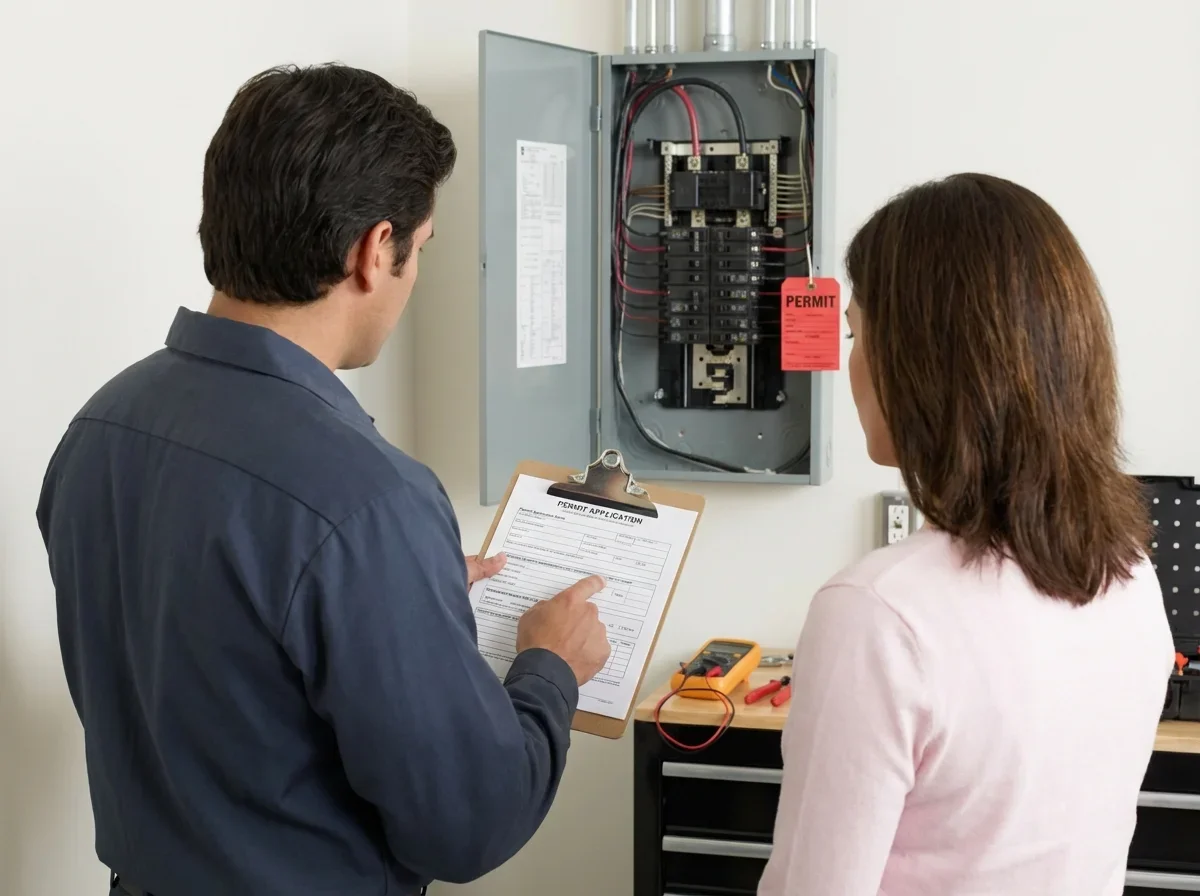
Most electrical work in Arizona requires permits. Panel upgrades, circuit additions, whole house rewiring, EV charger installations, and anything involving structural changes or new circuits all need permits.[2] Ask directly: "Will you pull permits for this work, and is that cost included in your estimate?"
Licensed electricians should pull permits as a matter of course. Unpermitted work can void your homeowner's insurance, block you from selling your home without costly re-inspection, and leave you liable if something goes wrong. The permit fee is usually $50-$200 depending on the scope.
A trivial cost compared to the legal and financial exposure of skipping it.
Ask who schedules the inspection and what happens if the work doesn't pass. The electrician should handle inspection scheduling and any required corrections at no additional charge. If they tell you "the inspector never fails our work," they're either extremely good or lying. Inspectors exist to catch mistakes. A professional electrician will fix any noted deficiencies and call for re-inspection until it passes.
What Code Compliance Means
Ask if the work will meet the current National Electrical Code (NEC) as adopted by Arizona, which follows NFPA 70 standards.[2] Compliance isn't negotiable. But not all electricians interpret the code the same way, particularly on older homes where grandfathered conditions exist.
If you're upgrading an older panel or adding circuits in a home built before 1980, ask how they'll address code violations discovered during the work. Do you have to bring the entire system up to current code, or just the new work? The answer depends on the scope and local enforcement, but you want an electrician who knows the difference and can explain it clearly.
Ask if they've worked with your city's building department before. Electricians familiar with Phoenix, Tempe, Mesa, or Scottsdale inspectors know what those jurisdictions focus on and what they'll let slide. That local knowledge can save you time and rework.
Ask About Their Experience With Your Specific Project
Not all electricians handle all work equally well. Ask how many jobs like yours they've completed in the past year. If you're installing a Level 2 EV charger and they've only done one before, you might want to keep looking. If you need aluminum wiring replacement and they've done dozens of those in older Phoenix homes, that's a strong signal.
Ask if they've worked in homes similar to yours. Same age, same construction type, same area.
A 1960s block home in central Phoenix has different electrical challenges than a 2015 stucco house in Gilbert. Electricians who've worked extensively in your type of home will anticipate issues before they become problems.
Experience With Arizona-Specific Conditions
Ask if they've dealt with Arizona's hard water corrosion on grounding systems, UV degradation on exterior wiring, or caliche soil conditions affecting trench work for pool electrical or landscape lighting. These aren't hypothetical concerns. Phoenix's water exceeds 300 ppm calcium carbonate in many areas, which accelerates corrosion on grounding rods and bonding connections. Desert UV exposure cracks wire insulation faster than humid climates. Caliche makes trenching for buried conduit 2-3 times more expensive than normal soil.
An electrician who's worked in Arizona for years will know these factors and price accordingly.
Someone new to the region might underbid a job, hit caliche two feet down, and either eat the cost or try to renegotiate mid-project.
Arizona Electrician Pro Tip: Before hiring, ask: "Have you worked on [specific age/type] homes in [your neighborhood] before?" Electricians familiar with your area's construction era know exactly what problems to expect—whether it's corroded aluminum wiring in 1970s homes, undersized panels in 1950s ranches, or caliche soil that turns a simple trench into a jackhammer job. Local experience prevents costly mid-project surprises.
Clarify What Happens If Problems Arise
Ask what their warranty covers and for how long. A standard warranty should cover both labor and materials for at least one year. Some electricians offer longer warranties on specific work (five years on panel upgrades, lifetime on certain installations). Get the warranty terms in writing.
Ask what happens if they discover additional problems once work begins. Do they stop and get your approval before proceeding, or do they make judgment calls and bill you later?
You want an electrician who calls you before adding unplanned work, even if it's clearly necessary.
Emergency Availability and Follow-Up
Ask if they offer emergency service and what that costs. If your panel fails on a Saturday night six months after they installed it, can you call them? Some electricians provide 24/7 emergency response to past clients at standard rates. Others will refer you to an emergency electrical service that charges premium pricing.
Ask how they handle follow-up issues. If you notice a problem a week after they finish (a light flickering, an outlet not working) will they come back and diagnose it without charging a new service call fee? The best electricians stand behind their work and won't nickel-and-dime you for legitimate warranty issues.
Red Flags That Should End the Conversation
Some warning signs are absolute deal-breakers. If the electrician can't or won't provide an ROC license number, end the conversation. If they discourage you from pulling permits or suggest doing unpermitted work to "save money," walk away.
If they ask for full payment upfront or only accept cash, you're dealing with someone operating outside normal business practices.
Vague answers about insurance, licensing, or qualifications are also red flags. A legitimate electrician will answer these questions directly and provide documentation without defensiveness. If they respond with "don't worry about it" or "we've never had a problem," that's not reassurance. That's evasion.
Trust Your Instincts on Professionalism
Ask yourself whether this person seems organized, knowledgeable, and respectful of your time. Did they show up to the estimate on time? Did they take notes? Did they explain things clearly or talk down to you?
The electrician who arrives late, forgets key details, or brushes off your questions is showing you exactly how the project will go.
Homeowners who prioritized communication, timeliness, and thoroughness during the hiring process consistently report better experiences. The ones who focused solely on price often regret it when the cheapest bid comes with poor communication, missed appointments, and surprise charges.
Match the Electrician to the Job Complexity
Not every project requires the same level of expertise. Installing a dimmer switch or replacing a light fixture is straightforward work most licensed electricians can handle. But if you're planning a whole house rewire, sub panel installation, or complex smart home wiring integration, you want someone with deep experience in that specific area.
Ask if they'll be doing the work themselves or sending a crew. If it's a crew, ask about their training and supervision. A journeyman electrician working under a master's license is fine. An apprentice working alone without supervision is not.
For specialized work like surge protection installation, fire alarm wiring, or commercial electrical projects, ask if they hold additional certifications or manufacturer training. Some equipment manufacturers require certified installers for warranty coverage.
References and Past Work
Ask for references from recent projects similar to yours. Three to five contacts is reasonable. When you call those references, ask specific questions: Did the electrician show up on time? Did they communicate well? Were there any surprises in the final bill?
Would you hire them again?
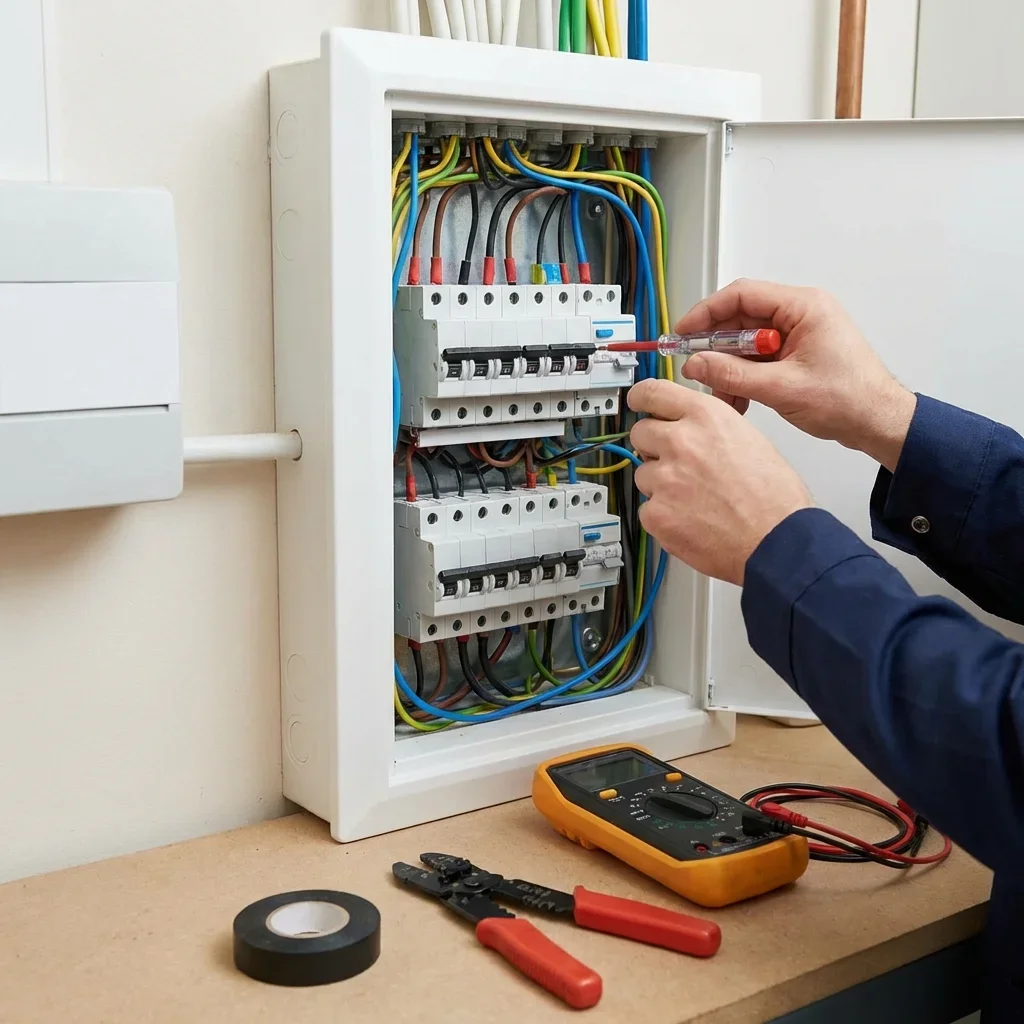
Ask if you can see photos of completed projects. Reputable electricians keep portfolios of their work (clean panel installations, neat conduit runs, properly labeled circuits). The quality of past work tells you what to expect.
Online Reviews and Reputation
Check online reviews, but read them critically. Look for patterns, not one-off complaints. If multiple reviews mention poor communication or surprise charges, believe them. If one angry review contradicts dozens of positive ones, it might be an outlier.
Ask if they're members of professional organizations like the Independent Electrical Contractors (IEC) or the National Electrical Contractors Association (NECA). Membership isn't mandatory, but it often signals a commitment to staying current on code changes and industry best practices.
Documentation and Record-Keeping
Ask if they provide detailed records of all work performed. For compliance-critical work, you'll want documentation showing what circuits were added, what materials were used, and when inspections passed. This becomes vital if you sell your home or file an insurance claim.
Ask if they'll update your panel schedule with accurate circuit labels.
A properly labeled panel tells you (and future electricians) exactly what each breaker controls. Unlabeled panels waste time during troubleshooting and create safety risks during emergencies.
Proof of Permits and Inspections
Request copies of all permits and signed inspection certificates. These documents prove the work was done legally and can be filed with your home records. If you're doing work that affects your home's value (like a kitchen remodel electrical upgrade or whole house generator installation) having this documentation can help during appraisal or sale.
How They Handle Safety and Cleanup
Ask what safety measures they take to protect your home and family during the work. Will they shut off power to specific areas or the whole house? How will they prevent dust and debris from spreading?
Do they use drop cloths and seal off work areas?
For projects requiring wall or ceiling access, ask how they handle drywall repair and paint matching. Some electricians include patching and painting in their bid. Others leave holes for you to finish. Knowing this upfront prevents frustration later.
Final Cleanup Standards
Ask what "cleanup" means to them. Does it include vacuuming, removing all debris, and leaving the site as they found it? Or does it mean sweeping once and calling it done?
The electrician's answer tells you how much post-project cleanup you'll be doing yourself.
The electricians who take pride in their work treat your home like their own. They protect floors, vacuum thoroughly, and remove every scrap of wire and packaging. The ones who don't care leave you picking staples out of your carpet for weeks.
- Occupational Safety and Health Administration (OSHA). "Electrical - Standards." http://www.osha.gov/electrical/standards. Accessed April 07, 2026.
- U.S. National Park Service (NPS). "Electrical Engineering Standards." https://www.nps.gov/dscw/ds-electrical.htm. Accessed April 07, 2026.
- Creative Safety Supply (summarizing OSHA and NFPA). "What are electrical safety standards and who enforces them?." https://www.creativesafetysupply.com/qa/electrical-safety/what-are-electrical-safety-standards. Accessed April 07, 2026.
- National Institute of Standards and Technology (NIST). "A Guide to United States Electrical and Electronic Equipment Compliance Requirements." https://nvlpubs.nist.gov/nistpubs/ir/2017/nist.ir.8118r1.pdf. Accessed April 07, 2026.